
Biosphere 2’s Wild Journey From Ambitious Experiment To Tourist Gem
As a child, I took several road trips. On one of these road trips, I remember stopping at a giant building with all sorts of plants and animals inside. This place is known as Biosphere 2, and is considered the world's largest earth science experiment. If you live in Arizona, it's definitely worth checking out, and here is why.
The Vision
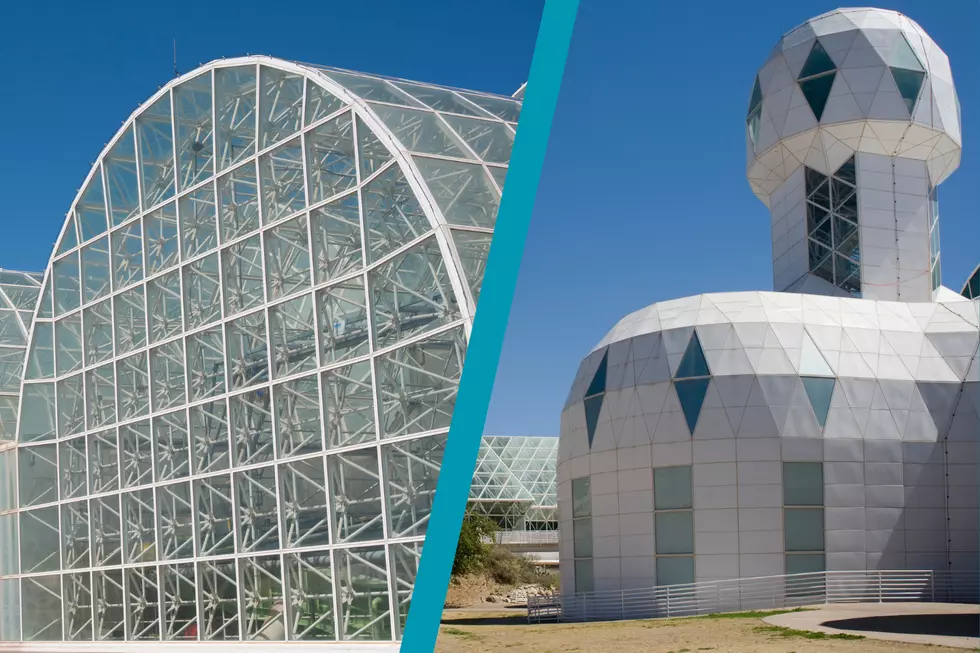
Biosphere 2 was built between 1984 and 1991, and it remains one of the most ambitious ecological experiments ever attempted. Located just north of Tucson, Arizona, the Biosphere 2 is home to 7 artificial biomes: an ocean, a rainforest, a desert, Savannah Grasslands, Mangrove Wetlands, an agriculture zone, and a human habitat.
Each biome in the Biosphere 2 was designed to replicate Earth's habitats on a smaller scale, allowing scientists to manipulate variables that would be impossible to regulate outdoors. There are thousands of windows, and every room has its own individual heating and cooling system.
FUN FACT: Biosphere 2 is referred to as such because Earth is considered the first biosphere.
READ: Why The Petrified Forest Is A Gem Of Arizona’s History
The Original Mission
In 1991, 8 scientists, 4 men and 4 women, volunteered to seal themselves inside the replica biosphere. The door of the biosphere was not to be opened, and scientists weren't allowed any connection to the outside world aside from mail. The idea behind this experiment was to see if we could create a space colony using the same concept.
In the early months, the ecosystem seemed to be working. Scientists grew food and were relatively stable, that was until the oxygen levels began to deplete. After that, carbon dioxide levels spiked, and many insects and plants began to die. Eventually, they were forced to open the doors and fill the building with oxygen. The crew survived a full 2 years, but the experiment was considered a failure.

The Facility Today
Today, the Biosphere 2 is still used for tourism and other types of experiments. One of the major scientific contributions that Biosphere 2 is making has to do with the health of coral reefs. According to the University of Arizona, the biosphere studies how higher temperatures and increased CO2 levels impact plant and animal life, especially the life of coral reefs.
READ: 3 Things You Might Not Know About The Grand Canyon.

Biosphere 2 stands as a reminder of how fiercely we're trying to understand the planet. As research continues, this Arizona landmark is pushing us to rethink bigger, dig deeper, and consider what is possible. Today, you can visit the Biosphere and take a tour around the facility; tickets are available on their website
CONTINUE READING: What Wildlife Comes Alive At Night In The Arizona Desert?
The Best Kid (and Budget) Friendly Summer Adventures in Arizona
Gallery Credit: Val Davidson/TSM
How Many of Arizona's Official State Symbols Do YOU Know?
Gallery Credit: Val Davidson/TSM
More From KWCD Country