
The Adventurous Spirit Behind Tombstone’s Prosperity
Ed Shefflin, the Founder of Tombstone
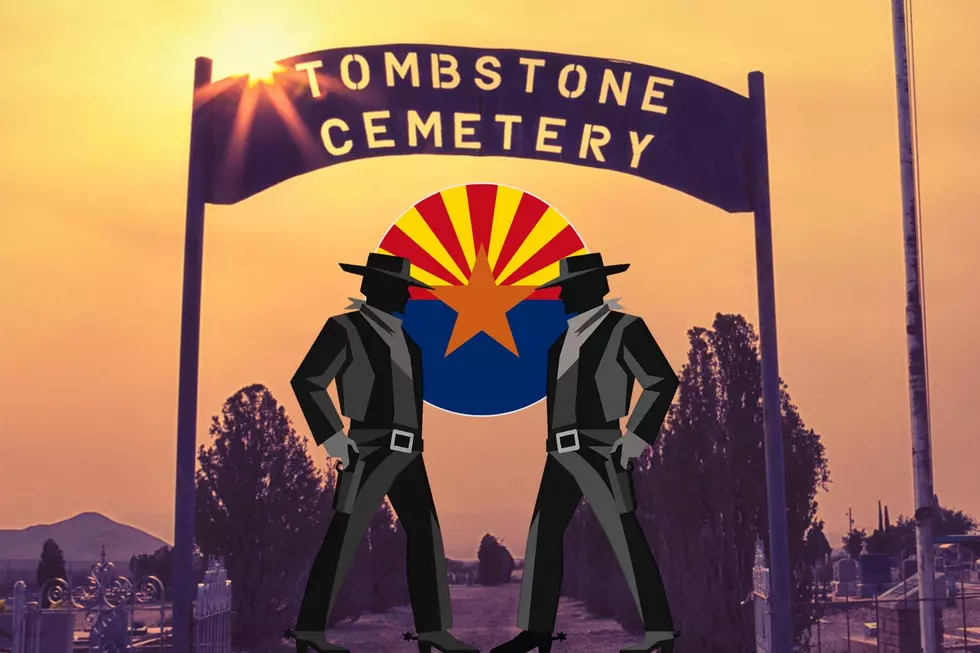
Everyone knows the tales of gunfights and outlaws that originate from Tombstone. Despite its not-so-glamorous reputation, Tombstone wasn't founded with the intention of becoming a haven for cowboys. It was originally founded by a US Army Scout named Ed Shefflin. Shefflin was a man with a sense of humor and good instincts for finding silver.

Life Before Prospecting
Ed Shefflin was born in 1847 in Wellboro, Pennsylvania. He grew up in a household with eight siblings. He was known for his adventurous spirit and strong work ethic throughout his youth. As a child growing up in the 19th century, he was around fantasies of gold rushes in the West, promises of exploration, and wealth. Not much else is known of his formative years, aside from the fact that those dreams came true.
RELATED: Cochise County's Wild West Stories

Leaving the fort
Ed Shefflin was a soldier with a dream. In 1877, Shefflin came to the San Pedro Valley as an indian Scout. his station was Fort Huachuca, or Camp Huachuca as it was known by at the time. He was known for exploring the unclaimed land in a search for riches. While on his hunt for silver, the soldiers he worked with had some snarky comments to make. They told Shefflin that he was far more likely to find his Tombstone than he was silver. So when he found silver veins and the mining community began to grow, he named it Tombstone.
Schefflin found a sample of silver ore near the Dragoon Mountains. Shortly after, in an attempt to find an appraiser, Shefllin met a man named William Griffith. Griffith promised Shefflin he would record anything he found, so long as he got a claim of his own. Despite the two men's certainty that they found silver worth while, the men they shared their dreams with didn't think the sample ore was worth anything. Around this time, Griffith left the venture to become a rancher, believing that it would be more prosperous than searching for silver.
Despite what everyone said, Ed continued to hunt for silver with nothing more than a gut feeling. He continued trying to get his ore looked at, and one day, after traveling to meet up with his brother Al, Ed Shefflin met Richard Gird. Gird was an assayer/appraiser who estimated the ore was worth about $2000 a ton! With this knowledge, Grid, Shefflin, and Shefflin's brother Al set out to stake their fame and riches.


Silver Viens
Sheflin's sense of humor extended beyond the name of the town. A lot of the mines in Tombstone were given slightly satirical names: Lucky Cuss, Good Enough, and Toughnut.
Lucky Cuss was the first big silver vein they found. As it had stood, all of the ore the trio had found had been to low grade to be worth anything more than a few pennies. One day, while prospecting, Ed found a vein of silver so pure it would hold the shape of whatever pressed against it. Ed Shefflin had also found $1500 worth of gold. When Gris saw this find, he said, “Ed, you are a lucky cuss. You have hit it.” So, the mine was then named "Lucky Cuss."
The Toughnut was given its name due to how dry the desert ground was. Shefflin awarded this mine the name "toughnut" because the ground was hard and tough to dig through, but produced enough silver to make the effort worth it.
The Good Enough Mine received its name because it had just enough silver in the vein to make mining it worth it. This silver vein was just "good enough."
After Striking Rich
After striking it big, Ed cleaned up his look. Now a millionaire. Ed Shefflin got married to a woman named Mary Brown and settled down in Los Angeles with his brother. His brother passed away in 1885, and Ed Shefflin caught the silver bug once again.
He made his way to Oregon, likely another hunch. Sadly, we will never know if Shefflin had just found his next major mining town. He was found dead in Oregon in 1897. He was alone, slumped over his work table with his journal and samples of gold ore. According to Tombstone Times, "The last entry in his journal simply read, 'Struck it rich again, by God.'" The gold ore on Ed's table was found to be worth a lot more than the $2000 a ton silver that made him rich the first time. No one new were these ores came from, as Shefflin had not made a map or left any sort of directions.

So was Ed Shefflin a fool or a genius? He started with nothing but a dream and a few cents to his name, and ended up becoming one of the most famous pioneers in the western region.
READ MORE: Why Bisbee is Named Bisbee, and Why Its Namesake Hates It
LOOK: Best lookout points in Arizona
Gallery Credit: Stacker
LOOK: Highest-rated things to do in Arizona, according to Tripadvisor
Gallery Credit: Stacker
More From KWCD Country