
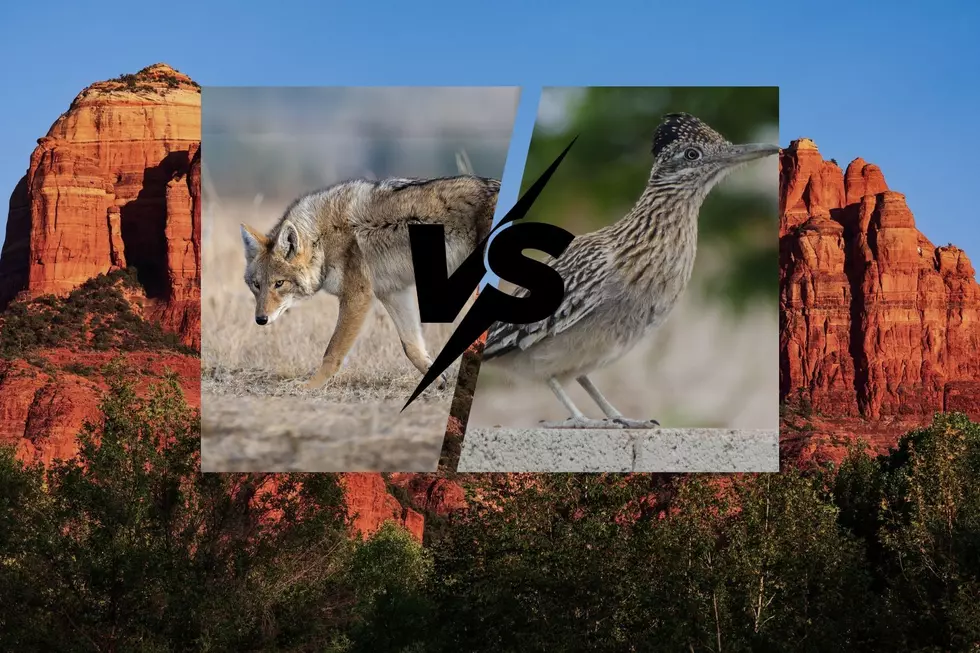
The Coyote and The Road Runner, Who Would Win In Real Life?
Most of us grew up watching Wile E. Coyote chase the Road Runner across cartoon desert cliffs with impossible physics. The show’s scenery, slapstick timing, and endless pursuit are iconic. But it always leaves me wondering: could a roadrunner actually outrun a coyote in real life?


A quick look at the cartoon's history
Creator Chuck Jones created the iconic duo in 1949 as a parody of serious predator‑prey cartoons. He said in an interview with the Research Library at Animation Art Conservation, the inspiration for Wile E. actually came from a Mark Twain Novel. In Roughing It, Twain describes the coyote as an allegory for want, inspiring Chuck to create Wile E.
The scenery came straight from the American Southwest. The Episode "Beep or Not to Beep" is confirmed to have taken place in the Monument Valley and Four Corners region, and a lot of the landscapes are inspired by the Sonoran Desert and the northern Phoenix region.
READ: Iconic Film Locations In Arizona You Might Not Know About

Coyotes and Road Runners in Real Life
The cartoon is an exaggerated depiction of a chase that we might see in the wild, of course, but the question remains: who would actually win?
Coyotes are built for stamina. They can sprint 35–43 mph for a few yards and can maintain a steady run around 20 mph for longer distances. Their hunting strategy relies on endurance. They wear down prey over time rather than relying on a single explosive burst.
Depending on the species of roadrunner, they can run between 20 and 26 miles per hour. They are the fastest running bird on earth, and prefer running to flying because it conserves energy, and they can only fly 100-200 feet at a time. They are not only agile, but they are also small and can maneuver in and out of brush and rock formations very easily.
RELATED: The Coyote In Apache Folklore, A Trickster, A Teacher, A Warning

Would a roadrunner be able to outrun a coyote in real life?
In a straight-line race, probably not. A coyote’s top speed easily beats a roadrunner’s. But real chases aren’t in straight lines. A roadrunner could escape by using terrain, tight maneuvering, and short, rapid bursts of speed. Coyotes are fast but not as nimble as the roadrunner at close range.
In a dense desert where cacti and vegetation are present, or in a rocky terrain as we see in Wile E. Coyote and The Road Runner, a roadrunner could absolutely slip away before a coyote closes the gap. But with just the right amount of starting distance, the coyote could also hypothetically win.

So while the cartoon coyote is doomed to fail, the real matchup is a lot more balanced. Speed favors the coyote, agility favors the roadrunner, and the desert decides the rest. It’s a chase that’s been happening long before animation, and some might say it's more interesting than any ACME gadget.
CONTINUE READING: Arizona's State Mammal Isn't One You Are Likely To See
10 Interesting Facts About Coyotes
8 of the World's Deadliest Animals are Found in Arizona
Gallery Credit: Val Davidson/TSM
More From KWCD Country


