
From Gold Rush Glory to Ghost Town: The Rise and Fall of Vulture City
Arizona was primarily known for its prosperous Silver and Copper mines. However, some towns in Arizona were built around gold mining. Vulture City, now a ghost town, was once home to the richest gold mine in Arizona history. How did this once prosperous mining community become completely abandoned, and is it still abandoned today?

Striking it Rich
In 1863, California prospector Henry Wickenburg discovered a rich gold deposit after spotting a vulture perched on a quartz outcropping. This discovery birthed the Vulture Mine, which ultimately produced more than 340,000 ounces of gold and 260,000 ounces of silver.
As word spread about the rich gold deposits, miners, merchants, and entrepreneurs flocked to the area in search of opportunity. At its peak, the town housed nearly 5,000 residents and included homes, boarding houses, a school, stores, saloons, and even a post office.
READ RELATED: Seven Hangings At Tombstone Courthouse Tied To Just Two Cases

Troubles
No mining town in the Wild West was without trouble. Like many other boomtowns across the state, Vulture City had its fair share of disasters, thefts, and hardships.
In 1890, heavy rains caused the new dam on the Hassayampa River to fail. A massive wall of water tore downstream, killing 150 people and destroying Henry Wickenburg’s farm in what became known as the Walnut Grove Dam Disaster. Though Wickenburg and the town sued, they never received a dime in compensation.
READ: True Stories Of Justice In Old Tombstone

Another tragedy struck in 1923 when "personal miners" would secretly enter the mines after hours and fill their pockets. However, the miners were removing gold from support pillars, and the mines caved in. Over 100 ft worth of rock collapsed, creating a depression that later became known as the Glory Hole.
A smaller mine was later opened at the site in 1930. Although it never matched the success of the original Vulture Mine, the timing was significant. With the Great Depression rolling in, Vulture City provided jobs and hope for prospectors and workers desperate for an opportunity to earn a living.

The Hanging Tree
Vulture City expanded fast and crumbled even quicker. With rapid growth and vast wealth, the town relied on swift, brutal vigilante justice to keep the peace. Today, one of the town's most infamous landmarks is the Hanging Tree, a centuries-old ironwood tree that still stands within the ghost town.
Vigilantes allegedly executed 18 men from its branches, primarily targeting "high-graders" who stole gold ore. The tree’s most notorious documented incident occurred on June 24, 1880, when a young miner named Jose Marie was hanged after murdering Sabrina Lucero, a woman who rejected his marriage proposal.
READ: The Mystery Of The Lost Dutchman's Gold In Superstition Mountains

Death of Vulture City
The Final blow to Vulture City came during World War II. In 1942, the federal War Production Board issued Limitation Order L-208, shutting down all non-essential gold mines to conserve machinery and manpower for the war effort. Vulture City emptied out almost overnight. Short-lived attempts were made to revive the mines after the war, but the town never recovered and was ultimately abandoned to the desert.
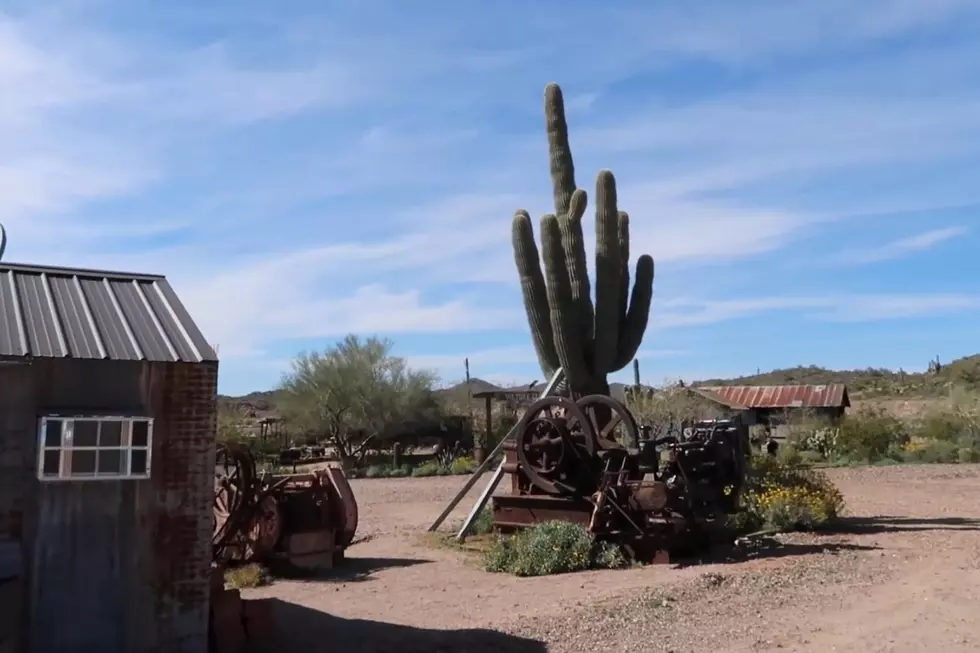
Today, Vulture City has no permanent residents, but it has not been forgotten. Private owners have restored many of its historic buildings, transforming the former boomtown into a living history museum that attracts visitors from across Arizona and beyond.
Check out this YouTube video from Weekend Escapades on Vulture City, Arizona!
CONTINUE READING: Gold Rush Legends of Arizona
The Forgotten Abandoned Arizona Town That Never Existed
Gallery Credit: Tim Gray
Arizona Ghost Towns That are a Former Glory of Themselves
Gallery Credit: Tim Gray
More From KWCD Country