
Old Tucson’s Wild History Goes Beyond the Silver Screen!
Whenever I think of Old Tucson, I think of a bustling Hollywood studio where tales of gunfights and Wild West legends are reimagined. That is because the Old Tucson we know today was completely built by Hollywood.
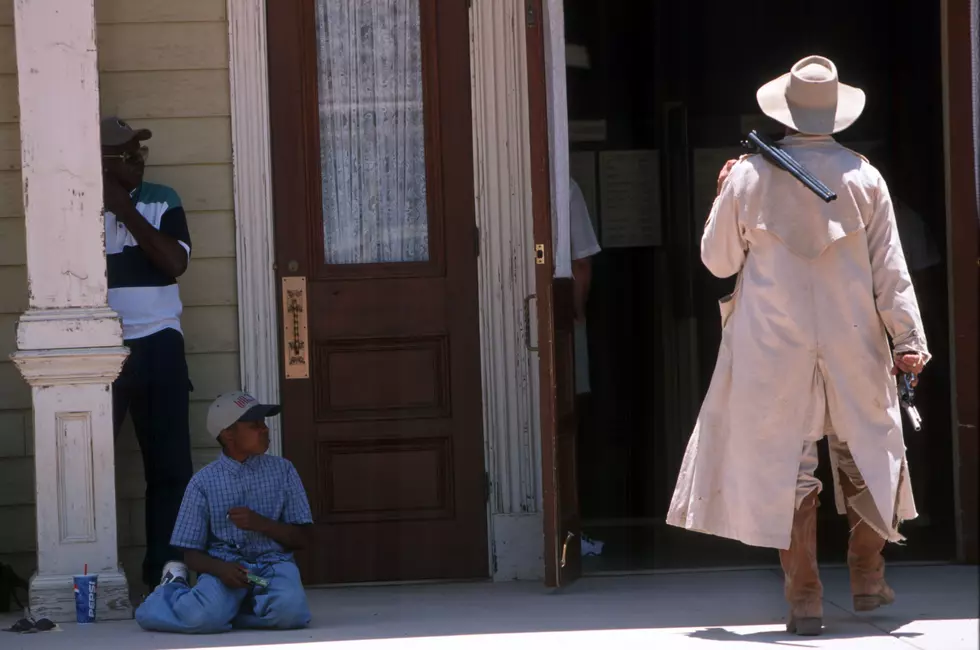
In 1939, Columbia Pictures constructed a replica 1860s frontier town here from scratch, kicking off a golden era of Arizona cinema. The studio lot served as the backdrop for over 400 major productions, including legendary Western films like Rio Bravo (1959), El Dorado (1966), and Tombstone (1993), as well as the beloved television series Little House on the Prairie.


The Old Pueblo
The Tucson we know today was initially founded by Hugo O’Connor in 1775 as a Spanish military camp. In the early days, the Spanish word pueblo (village) referred to the nearby Pima settlement at the base of the Mountain. Over time, though, it shifted to describe the entire walled Spanish community.
The name stuck as Tucson's nickname in 1880 nickname in March 1880, when the railroad arrived. Mayor "Bob" Leatherwood sent a proud telegram to the Pope announcing the connection, calling Tucson an “ancient and honorable pueblo.” Local newspapers loved the phrase, quickly shortening it to "The Old Pueblo".
READ: True Stories Of Justice In Old Tombstone
Once the State Capital
Long before Phoenix took the crown as Arizona's state capital, Tucson briefly held the title. Before Tucson stepped into the spotlight, the pine-filled northern town of Prescott served as the territory's first capital starting in 1864. However, by 1867, southern politicians successfully voted to shift power.
Tucson became the capital because it was the most developed city in the entire region, and Union officials strategically believed that placing the government there would help suppress residual Confederate sympathies in southern Arizona.
Tucson's reign lasted exactly a decade. In 1877, northern political leaders clawed power back, using a massive mining boom in Yavapai County to argue that Prescott better represented the territory's economic future. The capital packed up and moved right back north, leaving Tucson's unpaved streets behind forever.
READ MORE: Why Phoenix Became Arizona's Capital

War
While the specific "Old Tucson" movie park was engineered by Hollywood in 1939, it was meticulously built to replicate a very real, bloody history. Long before movie stars arrived, this region was deeply scarred by conflicts that shaped the old American West.
In 1775, Tucson was founded to shield early Spanish settlers from frequent Apache raids. For over a century, it served as a vital frontier staging hub during the brutal battles against legendary leaders like Cochise and Geronimo.

Tucson isn't known for the same Wild West cattle rustling, stagecoach robberies, and vicious shootouts that defined towns like Tombstone. But behind the choreographed stunt shows and screen productions lies a history of pivotal military clashes and frontier drama.
Today, the old studio lot is preserved as a living history destination under American Heritage Railways. Walking its dusty paths means stepping onto a landscape where authentic Arizona heritage and Hollywood storytelling permanently collide.
CONTINUE READING: Best Ghost Tours in Southern Arizona
13 Haunted Places In Arizona You Should Visit!
Gallery Credit: Harley Noble
The 10 Most Notorious People in Arizona History
Gallery Credit: Chris
More From KWCD Country